Softenger

Softenger India Pvt. Ltd. Logo

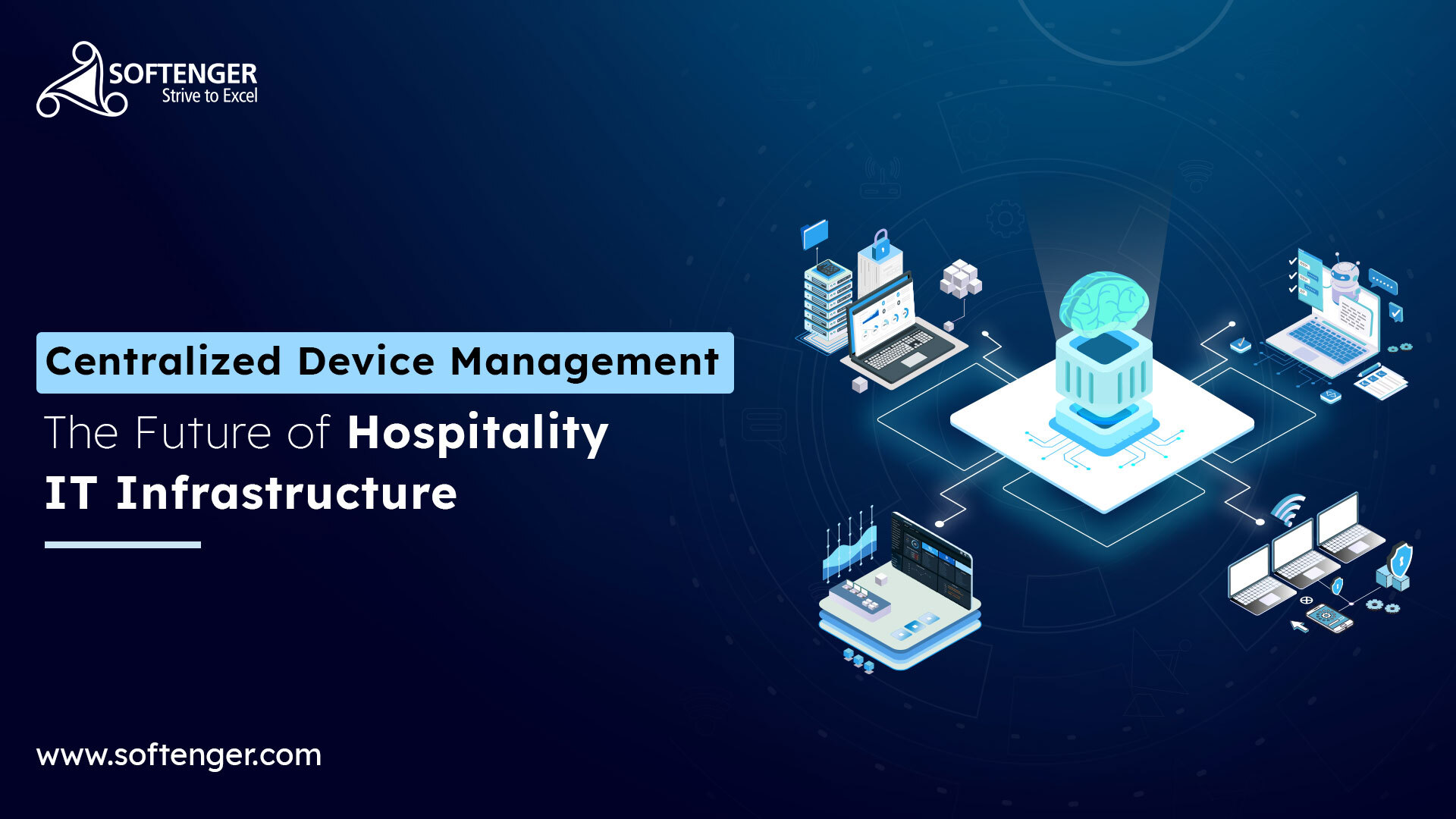
Why Remote and Centralized Device Management Is Transforming IT Operations in the Hospitality Industry

Distributed-Device Chaos: The New Reality of Hospitality IT

Modern hotels are no longer defined solely by physical infrastructure—they are powered by complex, distributed IT ecosystems.
Across U.S. hospitality portfolios, guest experiences now depend on thousands of connected endpoints: smart TVs, in-room tablets, POS systems, kiosks, digital signage, and IoT-driven building systems. Each device directly influences guest satisfaction, operational continuity, and security posture.
For CIOs, CISOs, and IT infrastructure leaders, this creates a growing operational risk: how to manage, secure, and standardize devices across multiple properties without increasing complexity or disrupting guest experiences.
This is where remote and centralized device management is becoming foundational—not optional.

The Rise of Device-Driven Hospitality Experiences

Today’s hospitality technology stack typically includes:
  • Smart TVs and interactive entertainment systems
  • In-room tablets and digital concierge platforms
  • Digital signage across lobbies and conference areas
  • Mobile check-in/check-out kiosks
  • POS systems and handheld devices
  • IoT devices for lighting, HVAC, access control, and energy management
Each endpoint expands both operational capability and exposure. Any downtime, misconfiguration, or security lapse can immediately impact brand perception.
As device volumes grow, traditional on-site IT support models are no longer scalable—especially across multi-property environments.

Why Centralized and Remote Device Management Is Gaining Momentum

Distributed Properties Demand Centralized Control
Most hospitality brands operate across:
  • Multiple hotels within a city
  • Regional chains
  • National or multi-property portfolios
Managing devices independently at each location often leads to:
  • Inconsistent configurations
  • Slower issue resolution
  • Higher operational costs
  • Increased reliance on on-site IT or local vendors
Centralized device management allows IT teams to monitor, manage, and control endpoints across all properties from a single interface regardless of location. This supports standardization, faster response, and stronger governance.
Lean IT Teams Under Cost and Availability Pressure
Hospitality IT teams are expected to:
  • Maintain high uptime across guest-facing systems
  • Support digital innovation initiatives
  • Control operating costs
  • Deliver 24×7 service continuity
Frequent site visits for routine tasks—device restarts, firmware updates, configuration changes—are increasingly impractical.
Remote-first operations enable:
  • Automated device health monitoring
  • Proactive issue detection
  • Remote diagnostics and remediation
  • Fewer on-site interventions
This shift reduces operational strain while protecting guest experience.
Automation Enables Proactive Operations at Scale
Modern centralized management platforms extend beyond visibility. They support:
  • Automated alerts for device failures or degradation
  • Predictive maintenance based on usage patterns
  • Remote content updates for signage and in-room systems
  • Structured firmware and patch lifecycle management
For infrastructure leaders, this marks a move from reactive support to proactive, policy-driven operations.

Signs You’ve Outgrown On-Site IT in Hospitality

If any of the following sound familiar, centralized and remote device management is no longer a future consideration:
  • Device issues are discovered by guests before IT
  • Firmware updates require scheduled site visits
  • Security patches are applied inconsistently
  • Issue resolution time varies widely by property
  • Local vendors manage devices with limited central oversight
  • Compliance evidence is collected manually
These are early indicators of systemic IT risk—not isolated inefficiencies.
Typical hybrid IT reference architecture:
  • Edge and substation systems handling real-time operations
  • Utility data centers supporting core applications and control platforms
  • Cloud environments enabling analytics, DR, and scalability
This architecture places a premium on orchestration, workload placement, and secure integration.

Security Implications of a Highly Connected Hospitality Environment

As device ecosystems expand, so does the attack surface. Hospitality organizations increasingly face:
  • Endpoint vulnerabilities across unmanaged devices
  • Network exposure from IoT and guest-facing systems
  • Risks from outdated firmware and misconfigurations
  • Ongoing challenges around access control and auditability
Centralized device management supports a security-first operating model by enabling:
  • Consistent policy enforcement across endpoints
  • Centralized access control and authentication
  • Continuous monitoring with audit logging
  • Faster isolation of affected devices during incidents
For CISOs, centralized visibility is essential to maintaining resilient, compliance-ready infrastructure.

Cloud-Enabled Device Management: Designed for Hospitality Scale

Cloud platforms now underpin modern hospitality IT. When integrated with centralized device management, cloud-enabled models offer:
  • Elastic scalability during seasonal demand peaks
  • Centralized analytics and reporting
  • High availability and recovery capabilities
  • Secure remote access for distributed IT teams
Sample Centralized Device Management Architecture
  • Edge Layer: Guest-facing devices, kiosks, IoT endpoints
  • Cloud Management Layer: Centralized monitoring, automation, analytics
  • IT Ops & Security Layer: SOC oversight, incident response, compliance monitoring
Hybrid IT models allow hospitality organizations to modernize device operations without disrupting legacy systems.

Translating Centralized Management into Measurable IT Outcomes

As organizations mature their remote operations, IT leaders increasingly track performance indicators such as:
  • Mean time to resolve device incidents
  • Time required to deploy patches across properties
  • Availability of guest-facing systems during peak usage
These KPIs help link infrastructure decisions directly to service reliability and guest experience.

Industry Perspective: How Hospitality IT Is Evolving

With over 25+ years of IT excellence, Softenger supports hospitality organizations managing complex, device-heavy environments through its AOTS approach:
  • Advice: Assess device ecosystems, infrastructure readiness, and security posture
  • Optimize: Improve performance, availability, and operational efficiency
  • Transform: Enable centralized, cloud-integrated device and infrastructure management
  • Support: Deliver 24×7 remote infrastructure, cloud, and security operations
Softenger’s core service pillars IT Infrastructure, Cybersecurity, Cloud Support, and Application & Product Support are designed to support multi-property, always-on hospitality environments.
With global delivery across the USA, India, Singapore, Malaysia, and the UAE, Softenger works with hospitality IT teams navigating scale, complexity, and resilience requirements.

Looking Ahead: Centralization as a Strategic Foundation

Remote and centralized device management is no longer just an operational convenience it is a strategic foundation for modern hospitality IT.
IT leaders must align infrastructure operations with guest experience goals, scale device ecosystems securely, and maintain operational control across distributed locations.
Organizations that invest early in centralized, automated, and security-aware device management will be better positioned to deliver consistent guest experiences—without overwhelming their IT teams.

Regain Control Across Every Property

See how centralized device management helps hospitality IT leaders standardize operations, reduce on-site dependency, and protect guest-facing uptime at scale.

Insights, analysis and research

Scroll to Top